Xingu Missionary Updates

Bud’s writes: “I had the pleasure of traveling on the TransAmazon Highway for a week and doing a survey trip for church planting. The doors are wide open for those wanting to work to expand God’s Kingdom…” and more stories and photos if you scroll down the page.

http://budsimon.blogs.com/my_weblog/2010/09/open-doors-on-the-transamazon.html

Marabá / Altamira Flights

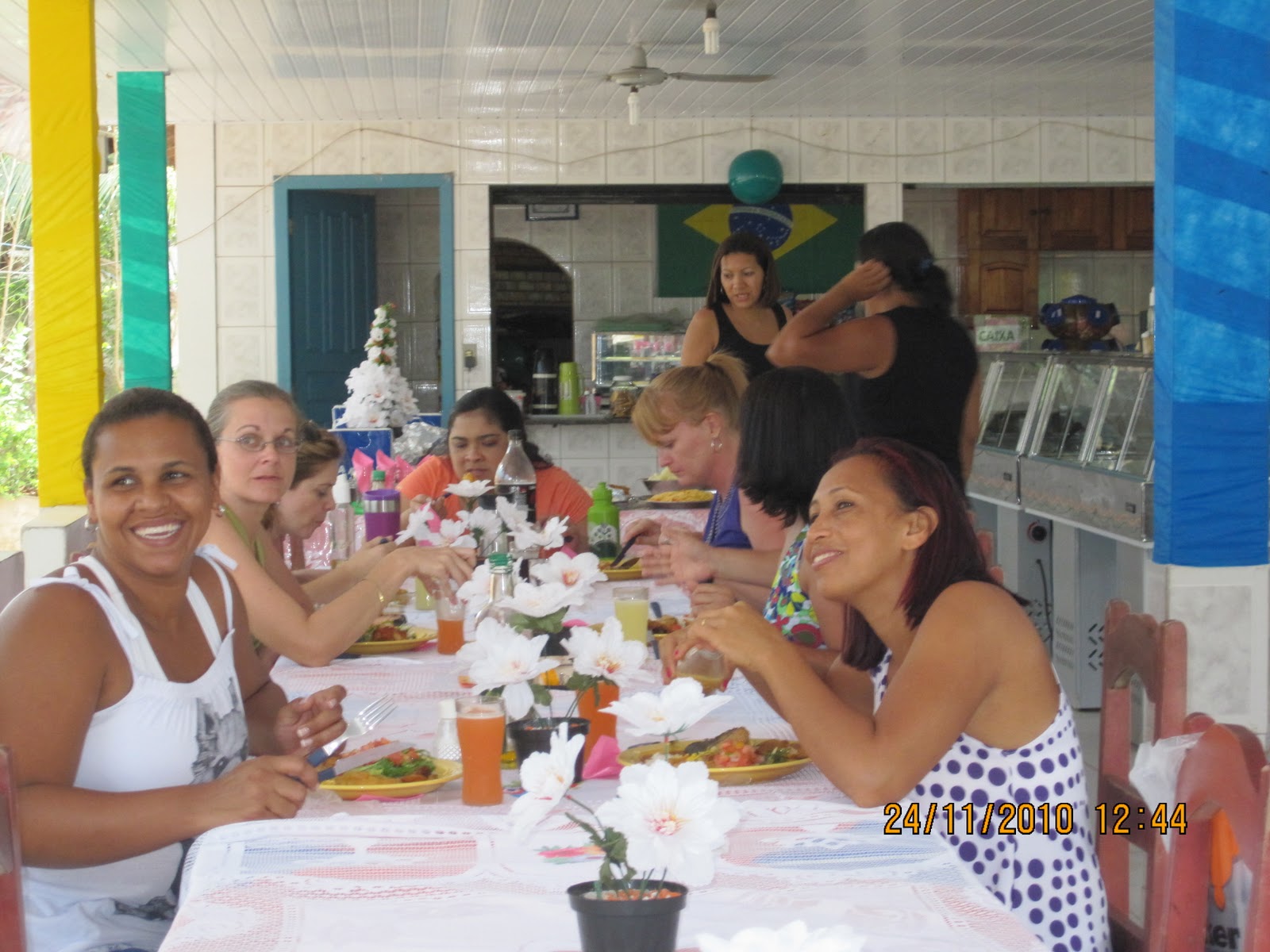
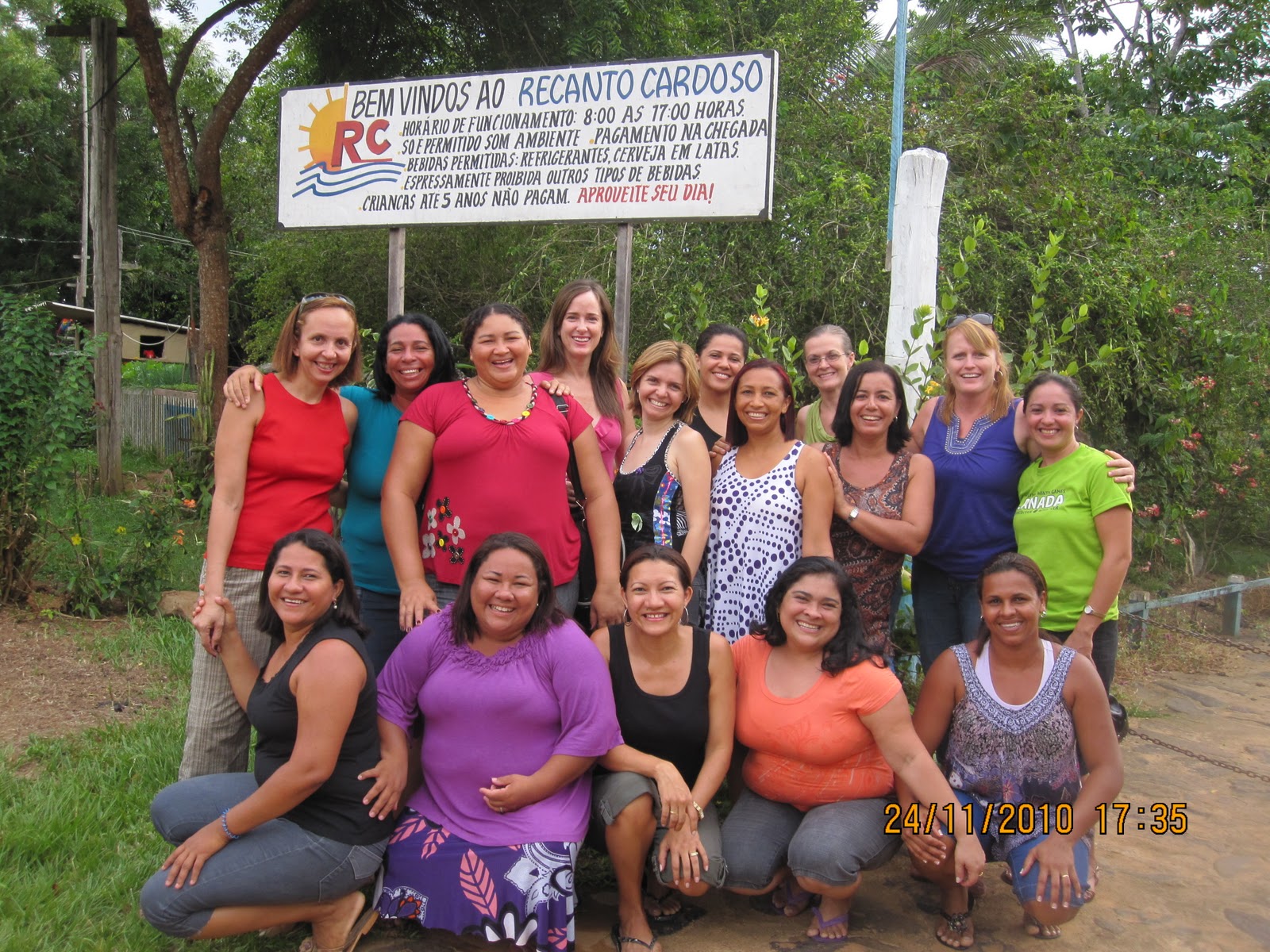
Deanna and Monica arrived home safely from a Pastor’s Wives retreat in Altamira. Our work almost always seems harder on the wives than on the husbands. Elba and Angelita planned the event. One of the themes: “Learn to Fight Well”. This is really a big problem in our neighbourhood here in Marabá. People often make difficult choices when responding to conflict or disagreements. Things escalate. Has this ever happened to you?

We discovered a new flight has opened up, directly from Marabá to Altamira and back. The first few seats on every flight are sold at the promotional price of a bus ticket. This was Monica’s first time in a airplane: a 45 minute flight, no dust – low risk of breakdowns – lower risk of bandits vs 14 hours of an adventurous bus ride home.

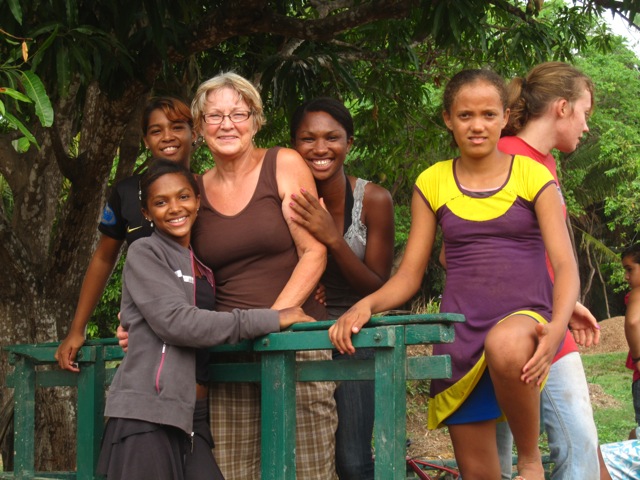
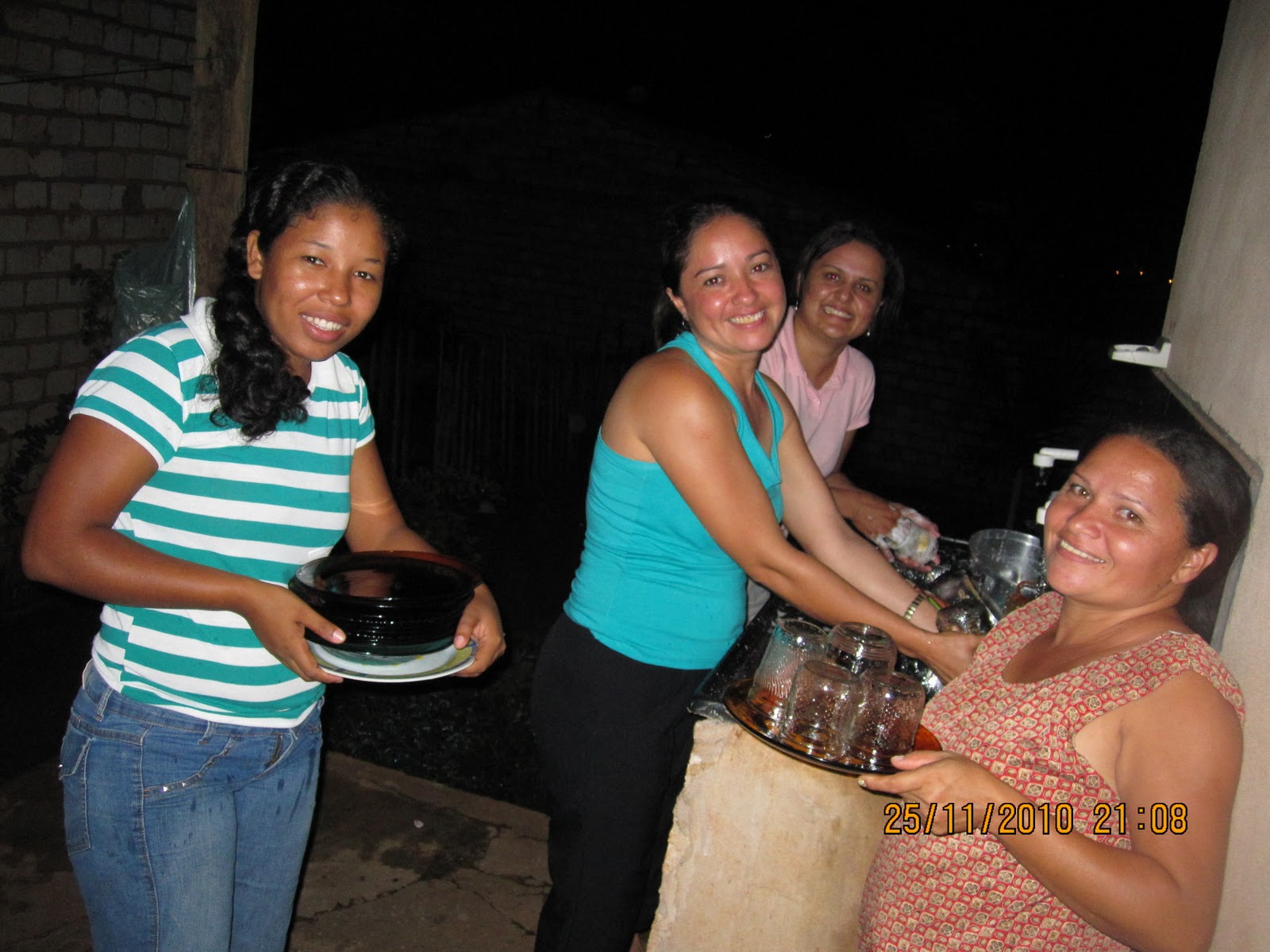
Deanna was able to celebrate American Thanksgiving with our missionary family in Altamira, and Monica was able to spend some time with her family. I am including a picture of Monica with some of her close relatives.

END.

Marabá: A Strategic City to Train Leaders

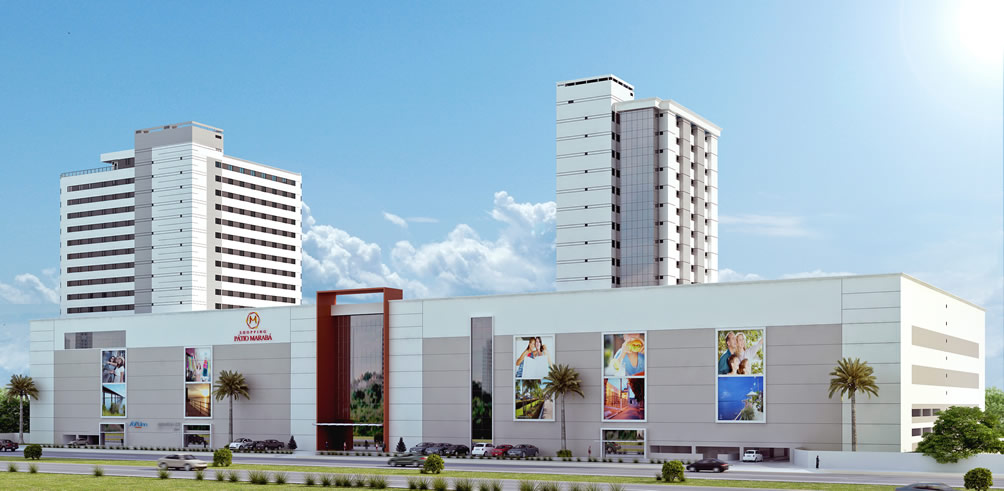
Marabá is getting a shopping mall! According to the internet link below, the mall will open Phase One in April 2012. By the time it completes Phase Two two years later it will include almost 200 stores, parking for 1,100 cars and two towers, one as a hotel and one as office space.
We are excited about this for two reasons:
1. Now is a very strategic time to build a regional outreach and pastoral training center. People from the neighbouring towns will come in, train, and return to their home towns to reach their own “unreached” villages. With just a short drive from anywhere in our region we can arrive at places where horses and carts and small boats are the most common means of transportation.
2. Deanna and I will be able to go to the mall for date night.
END.
http://www.patiomaraba.com.br

The Lift

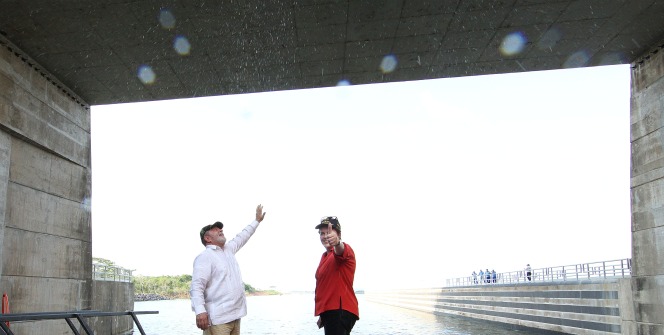
The president of Brazil, President Lula, came to our region this week as he opened the “Eclusa do Tucuruí”. This is a way for boats to pass over the Tucuruí dam. You might be more familiar with the word “lock”, as is used in the Panama Canal or on the Great Lakes. This lift, as they are called in English, has a much greater vertical distance than a more common lock. This lift is a two-stage altitude difference of 69 meters or 226 feet. This project has been underway for 20 years and is almost the size of the Panama Canal.
Apparently up to four line boats will be able to pass through at one time. I look forward to the day I see these boats passing through. As this gets going it will become possible for us to go by boat from Marabá to Porto de Moz and close to Altamira, and other places where we plant churches. The Tucuruí reservoir has a surface area of 2800 square kms, or 1,080 square miles. Most of the river villages are below the reservoir and along the tributaries and waterways directly linked to the Amazon River. 
We look forward to helping bring the message of hope along these waterways. Most of the villages near us are connected to the road system. The region is so vast. We are eager to go as far and as deep as we can with the people and resources God joins together, planting churches which builds stronger families, stronger communities. Less bad, more good.

http://www.brasilianasorg.com.br/blog/paulo-cezar/as-eclusas-da-hidreletrica-de-tucurui

END

First Advent

I remember the excitement of coming to church, four Sundays before Christmas, and seeing a wreath at the front near the pulpit, with four candles, one of them lit.

As near as I can understand, this is a symbol of a time of waiting. In the Old Testament, the Jews waited for the Messiah. Now we wait for His second coming.

Waiting is good. Waiting is kind of like the “smell” of good food in the kitchen, or the “sound” of a friend driving up to the house. It is an anticipation of some very important about to happen. Waiting is like building the foundations under a house. If we learn to wait well, we will live richer lives.

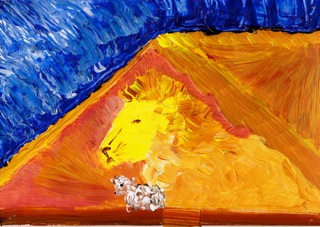
Here are four Christmas cards the girls and I painted this year. I will post them today, on the First Advent Sunday.

Why the "bad guys" make very good "good guys".

We are praying that the bandits and “bad guys” in our neighborhood will become the next generation of missionaries, pastors and leaders. They have a lot of things going for them.

1. They crave adventure.
2. They long for a few good friends.
3. They do not put a high value on their lives.
4. They have the chance to be “forgiven much”, and so it will be easier for them to “love much”.
5. They are reaping the wages of their sinful lives even here on this earth, and things will get worse for them if they stay on their current track.

Nilton Cordeiro, who has personally planted more churches than anyone else I know, told me that the darker the region, the easier churches are to plant. “People get so tired of prostitution, crime, fear, greed and wickedness”.

Jesus taught how the prostitute loved God more than one of the “pastors” of His day. “He who is forgiven much loves much, but he who is forgiven little loves little”. It is our perception of how much we have been forgiven that is really important. This perception has a direct relation to how much we are able to minister to others out of true compassion. Significant time alone with Jesus gives us all the capacity to “love greatly”.

Moses the Black is one of the early church fathers. He lived from 330 A.D. to 405 A.D. His writings are still studied today. Here is a quote from Wikipedia.

“Moses was a slave of a government official in Egypt who dismissed him for theft and suspected murder. He became the leader of a gang of bandits who roamed the Nile Valley spreading terror and violence. He was a large, imposing figure.”

“On one occasion, a barking dog prevented Moses from carrying out a robbery, so he swore vengeance on the owner. Weapons in his mouth, Moses swam the river toward the owner’s hut. The owner, again alerted, hid, and the frustrated Moses took some of his sheep to slaughter. Attempting to hide from local authorities, he took shelter with some monks in a colony in the desert of Scetes, near Alexandria. The dedication of their lives, as well as their peace and contentment, influenced Moses deeply. He soon gave up his old way of life, became a Christian, was baptized and joined the monastic community at Scetes.”

“Moses had a rather difficult time adjusting to regular monastic discipline. His flair for adventure remained with him. Attacked by a group of robbers in his desert cell, Moses fought back, overpowered the intruders, and dragged them to the chapel where the other monks were at prayer. He told the brothers that he didn’t think it Christian to hurt the robbers and asked what he should do with them. The overwhelmed robbers repented, were converted, and themselves joined the community.”

“Moses was zealous in all he did, but became discouraged when he concluded he was not perfect enough. Early one morning, Saint Isidore, abbot of the monastery, took Moses to the roof and together they watched the first rays of dawn come over the horizon. Isidore told Moses, “Only slowly do the rays of the sun drive away the night and usher in a new day, and thus, only slowly does one become a perfect contemplative.”

“When a brother committed a fault and Moses was invited to a meeting to discuss an appropriate penance, Moses refused to attend. When he was again called to the meeting, Moses took a leaking jug filled with water and carried it on his shoulder. When he arrived at the meeting place, the others asked why he was carrying the jug. He replied, “My sins run out behind me and I do not see them, but today I am coming to judge the errors of another.” On hearing this, the assembled brothers forgave the erring monk.” End of quote.